Introduction to Programming and Types of Programming Languages
What is Programming?
It only follows instructions written by us in a form it can understand.
Real-Life Example of Programming
Let’s take a simple example—making tea:
-
Boil water
-
Add tea powder
-
Add sugar
-
Pour into a cup
This step-by-step method is called an algorithm.
In programming, we also write instructions step by step, and the computer executes them in order.
What Is a Language?
Humans use languages like English, Kannada, or Hindi to communicate with each other.
Computers, however, understand only machine language (0s and 1s).
To make communication between humans and computers easier, programming languages were developed.
Types of Programming Languages
(How Humans and Computers Communicate)
Programming languages are mainly classified into three types:
1.Machine Language
Machine language is the lowest-level programming language.
It consists only of binary digits (0 and 1), which are directly understood by the computer’s hardware.
Characteristics of Machine Language:
-
Uses only 0s and 1s
-
Directly executed by the computer
-
Very fast execution
-
Extremely difficult for humans to read and write
-
Machine dependent (works only on specific hardware)
Uses only 0s and 1s
Directly executed by the computer
Very fast execution
Extremely difficult for humans to read and write
Machine dependent (works only on specific hardware)
Example of Machine Language:
Why Machine Language Is Difficult:
-
No English words or symbols
-
Hard to debug errors
-
Writing large programs is nearly impossible
No English words or symbols
Hard to debug errors
Writing large programs is nearly impossible
Because of these difficulties, machine language is rarely used by programmers today
2. Assembly Language
Assembly language is a step above machine language and is slightly easier for humans to understand.
Instead of binary numbers, it uses mnemonics (short words) to represent instructions.
Characteristics of Assembly Language:
-
Uses symbols like
ADD,SUB,MOV -
Easier than machine language
-
Still close to hardware
-
Requires a translator called an assembler
-
Machine dependent
Example of Assembly Language:
Advantages:
-
Easier to read than machine language
-
Faster than high-level languages
-
More control over hardware
Disadvantages:
-
Still difficult for beginners
-
Programs are lengthy
-
Not portable across different machines
Assembly language is mostly used in embedded systems, device drivers, and hardware-level programming.
3.High-Level Languages
High-level languages are designed to be easy for humans to read, write, and understand.
They use English-like syntax, which makes programming simpler and faster.
Characteristics of High-Level Languages:
-
Easy to learn and use
-
English-like words and syntax
-
Platform independent
-
Requires a compiler or interpreter
-
Widely used in software development
Examples of High-Level Languages:
-
Python
-
Java
-
C
-
JavaScript
Example (Python):
Advantages:
-
Beginner-friendly
-
Easy debugging
-
Faster development
-
Used in web, AI, mobile apps, and software
Disadvantages:
-
Slightly slower than low-level languages
-
Less direct hardware control
Most modern applications, websites, and AI systems are built using high-level programming languages.

What is a Programming Language?
A programming language is a formal language used to write instructions for a computer.
It acts as a bridge between humans and machines.
Programming languages help humans write instructions in an easy way, which are later converted into machine language for the computer to understand.
Programming languages act as a translator between humans and computers
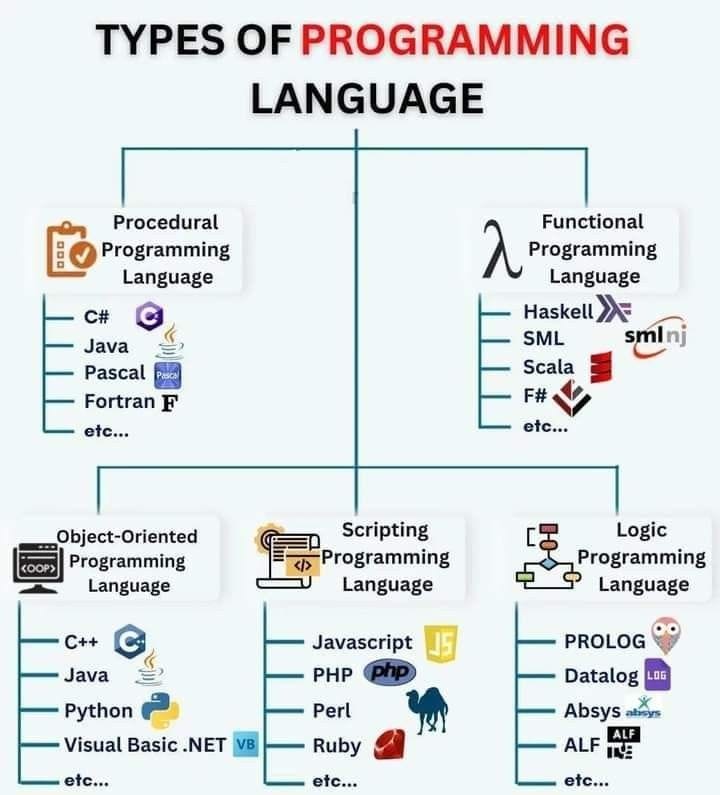
Some popular programming languages are:
-
Python
-
Java
-
C
-
JavaScript
Programming is not about memorizing code.
It is about thinking logically and solving problems.
Once you understand the basics, you can build powerful applications and systems.
Nice explanation
ReplyDelete